What Is Torbangun? Benefits, Breastfeeding Research, and How It’s Used
To my knowledge I’m the first person in the US to grow what has become known as torbangun commercially. I didn’t realize until much later but my relationship with the plant started as a young boy in Bermuda where in grows wild. Bermudians call it Spanish thyme. It’s also sometimes called Cuban Oregano. Different cultures have used the plant in a culinary sense for centuries. Scientists go back and forth between calling it Plectranthus amboinicus and Coleus amboinicus. New moms know the plant as torbangun because that’s what it’s called in Indonesia where studies have shown that women there use the plant effectively to increase milk production.
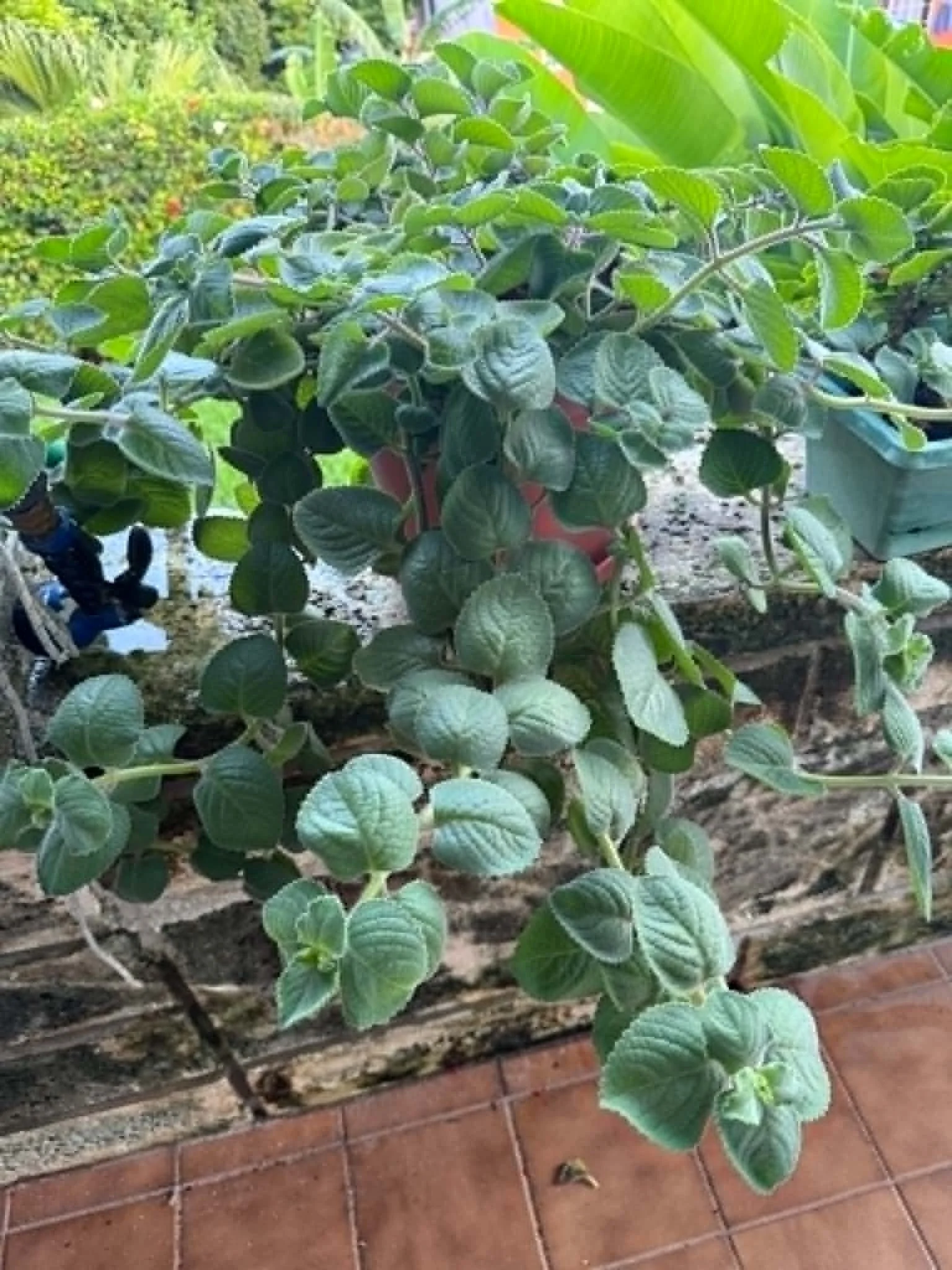
My granny still grows it on her porch! She’s 87 :)
As many breastfeeding mothers know, low milk supply can be one of the most frustrating challenges after birth.
So what is Torbangun exactly?
Torbangun is an herb that smells positively intoxicating and is in the mint family that has attracted increasing scientific interest because of its potential effects on breast milk production. Even though it’s sometimes referred to as thyme or mint it smells entirely unique so the closest we can describe it is essentially minty.
It’s a perennial herb (comes back year after year unless there’s a frost, we have to bring it indoors during the winter here in NC) and is native to parts of Asia and and has become widely cultivated in Indonesia. The leaves are thick, fragrant, and slightly fuzzy.
In Indonesia, Torbangun has long been used as a postpartum food for nursing mothers, particularly among the Batak people of North Sumatra. Sumatra is amazing - home to the like of such magical creatures such as orangatans and begonias. Rather than being consumed only as a supplement there, it is often prepared as a traditional food during the weeks following childbirth in a thick soupy sort of concoction.
Because of this long history of use, researchers became interested in whether Torbangun might have measurable effects on milk production and maternal recovery.
Torbangun and breastfeeding

So Torbangun has become widely known for its traditional use as a galactagogue, a substance that may help support breast milk production.
While initial studies only showed that it does work, newer studies show exactly how (perhaps the topic for another post)
What makes Torbangun unusual among herbal lactation supplements is that it has been evaluated in human clinical studies, not just traditional practice.
What does the research say?
Several studies conducted in Indonesia have examined Torbangun in postpartum women.
One of the most frequently cited studies found that mothers consuming Torbangun experienced a greater increase in milk production compared with some other traditional lactation interventions. Researchers observed increased milk volume during the postpartum period, suggesting that the herb may have meaningful lactation-supporting properties.
Other studies have explored its nutritional composition, phytochemical profile, and potential effects on maternal health.
The research is promising, but it is not definitive. Most studies have been relatively small and conducted in specific populations. More large-scale, well-controlled trials are still needed. For now reviews on a lot of supplements are significantly positive.
A balanced interpretation is that Torbangun has encouraging human evidence and a long history of traditional use, but it should not be viewed as a guaranteed solution for low milk supply given we all know there’s a million and one new stressors when we first start breastfeeding. Over the years I’ve gotten more and more detailed with my email responses (the topic of another blog for sure) - but feel free to always reach out.
How Torbangun differs from fenugreek
Fenugreek was the herb most commonly associated with milk supply in North America, but Torbangun differs from it in several important ways.
Fenugreek has a larger body of international research, but study results have been mixed. Some mothers report significant benefits, while others experience little change or unwanted side effects. When we first started making boob food, to cover our bases we made a blend of the two herbs, it was the suggestion of new moms that we make a pure extract, especially since we were growing it ourselves.
Torbangun has a smaller research base, but the available human studies are surprisingly compelling given how little the herb is known outside Indonesia.
Another important difference is preparation. Many commercial Torbangun products use dried leaf powder, whereas traditional Indonesian use often involves fresh leaves prepared as food. That’s why we do the same.
This distinction may matter because fresh herbs can differ substantially from dried herbs in aroma, volatile compounds, and phytochemical composition. The good stuff can simple be degraded. We definitely don’t want that.
Why preparation matters
One of the most overlooked aspects of herbal supplements is how the plant is prepared.
Torbangun can be consumed as:
Fresh leaves
Cooked leaves
Tea
Fresh extracts
Tinctures
Dried powders
Capsules
These preparations are not necessarily equivalent.
Fresh plant material contains water-soluble compounds, aromatic oils, and other constituents that may be altered during drying and storage.
Traditional postpartum preparations in Indonesia generally emphasize fresh plant material, which is one reason many Torbangun growers and herbalists prefer fresh or minimally processed preparations.
How mothers use Torbangun
Torbangun is typically used during the postpartum period while breastfeeding.
Mothers often begin using it in the early weeks after delivery, although the timing varies depending on individual circumstances. A lot of our moms come to us with dwindling supplies and order the quickest shipping available.
As with any lactation supplement, it is generally most effective when combined with:
Frequent milk removal
Effective infant latch
Adequate hydration
Sufficient calorie intake
Appropriate breastfeeding support
An herb alone cannot overcome many of the common causes of low milk supply, such as infrequent nursing, poor milk transfer, or underlying medical conditions. Stress is also a major factor and can also directly interfere the the way it works. As if anyone needs that sort of pressure!
How long does Torbangun take to work?
This is one of the most common questions new moms ask us.
Published research does not provide a definitive timeline, and individual responses appear to vary considerably.
After nearly two decades of correspondence it seems that some women notice changes within several days, while others may require longer use before observing difference. For those with dwindling supplies it can take 2-4 weeks.
Because milk supply naturally changes during the postpartum period, it can be difficult to determine exactly how much improvement is attributable to any single intervention.
Is Torbangun safe while breastfeeding?
The available human studies have generally reported good tolerability, and Torbangun has a long history of traditional postpartum use in Indonesia.
However, this does not mean that it is risk-free.
As with any herbal supplement, breastfeeding mothers should consider:
Individual allergies or sensitivities (we always suggest putting a couple of drops of boob food on your wrist first if you typically have other food allergies) to see if you have a reaction and then monitor how it sits with your digestion afterwards. 99% of people have no issue at all.
Existing medical conditions
Prescription medications
Guidance from a qualified healthcare professional
The research on long-term use, interactions, and use in mothers with complex medical conditions remains limited.
Potential side effects
Published reports suggest that Torbangun is generally well tolerated, but possible side effects may include all the same stuff associated with any sort of food or medicine like:
Digestive upset
Individual allergic reactions
Changes in appetite
Unpleasant taste or odor
Most reported concerns are relatively mild, but mothers should discontinue use and seek medical advice if they experience significant symptoms.
Some of our most frequently asked questions:
Can Torbangun be used while exclusively pumping?
Many new moms successfully use Torbangun while pumping, although research specifically focused on exclusive pumping is limited.
Can Torbangun be combined with other lactation herbs?
Some mothers combine it with herbs such as moringa or goat’s rue, but research on these combinations is limited. This is one of the issues with figuring out what is working and where you should focus your spending. Combinations can dilute the good stuff.
Is dried Torbangun as effective as fresh Torbangun?
This has not been conclusively studied. Traditional use like in the original studies often emphasizes fresh leaves, and different preparations may not be equivalent.
Can Torbangun replace breastfeeding support?
No. In our experience if someone is experiencing low milk supply, evaluation by a lactation consultant or healthcare professional is often important to identify the underlying cause. We don’t claim to have some sort of magical solution, we’ve been there and it’s complicated.
Why I became interested in Torbangun
Even though I often saw the plant growing wild in Bermuda it wasn’t until my daughter was born and her mom struggled with breastfeeding that I began researching what might help. It may have helped that by that point I was a botanist LOL. To my surprise it was a plant I was completely familiar with. This was decades ago and at the time I couldn’t find any suppliers. Luckily I knew just where to get it! It started with the few dozen cuttings I brought home.
These days I’m harvesting it constantly from our literal hundreds of plants:

The bottom line
Torbangun is a fascinating traditional Indonesian lactation herb with a growing body of scientific research behind it. While more research is still needed, the existing human studies suggest that it may help support breast milk production in some postpartum mothers.
Its combination of traditional use, clinical research, and unique preparation methods makes it one of the most interesting herbal galactagogues available today. It’s certainly one of the only pure and standalone options.
For mothers exploring natural approaches to breastfeeding support, Torbangun is worth understanding—but it is best viewed as one part of a comprehensive approach to lactation, not a miracle cure.
Stay strong out there ladies and as always reach out to us for questions,
Aaron
Damanik R, et al. Studies on Torbangun (Coleus amboinicus) and postpartum lactation in Indonesian mothers.
Additional peer-reviewed research on Coleus amboinicus, lactation, and postpartum nutrition.